Lower Back Ache (LBA): Common Conditions We Address
Overview:Lower back ache (LBA) can arise from several conditions affecting the spine, discs, muscles, and surrounding structures. Common causes include lumbar spondylosis, prolapsed or herniated discs, loss of lumbar lordosis, muscular spasms, disc degeneration, poor posture, prolonged sitting, inadequate physical activity, or excessive strain on the lower back. Lifestyle and daily activities can contribute to or aggravate these problems. Inadequate physical activity and insufficient strength and support around the spinal and core muscles can leave the lower back more vulnerable to everyday stresses, sudden movements, and activities such as lifting heavy weights.
What we treat: We provide yogic treatment for cases of:
- Sciatica pain
- Slipped disc
- Prolapsed disc
- Day-to-day lower back ache due to long sitting hours, excessive driving, obesity, or incorrect body alignment
- Weak lower back
- Loss of lordosis
- Muscle spasms
Common symptoms of patients approaching us: Normally, patients suffer from:
- Pain in the lower back when they sit for long hours in the office or while standing or walking
- Morning stiffness
- Constant feeling of tiredness
- Tingling sensation in the legs, either above the knee or extending to the base of the foot
- Pins-and-needles sensation
- Frequent numbness
- Heaviness in the feet
How Focused Yoga Therapy can help:
- Yoga therapy can help mitigate pain and improve the level of comfort during daily routine activities.
- Strengthens the body to help prevent further damage to the system.
- Posture correction for sitting, standing, and walking
- Educates patients about the do’s and don’ts and the basic care that their spine needs on a daily basis.
- Helps patients become independent in managing their symptoms.
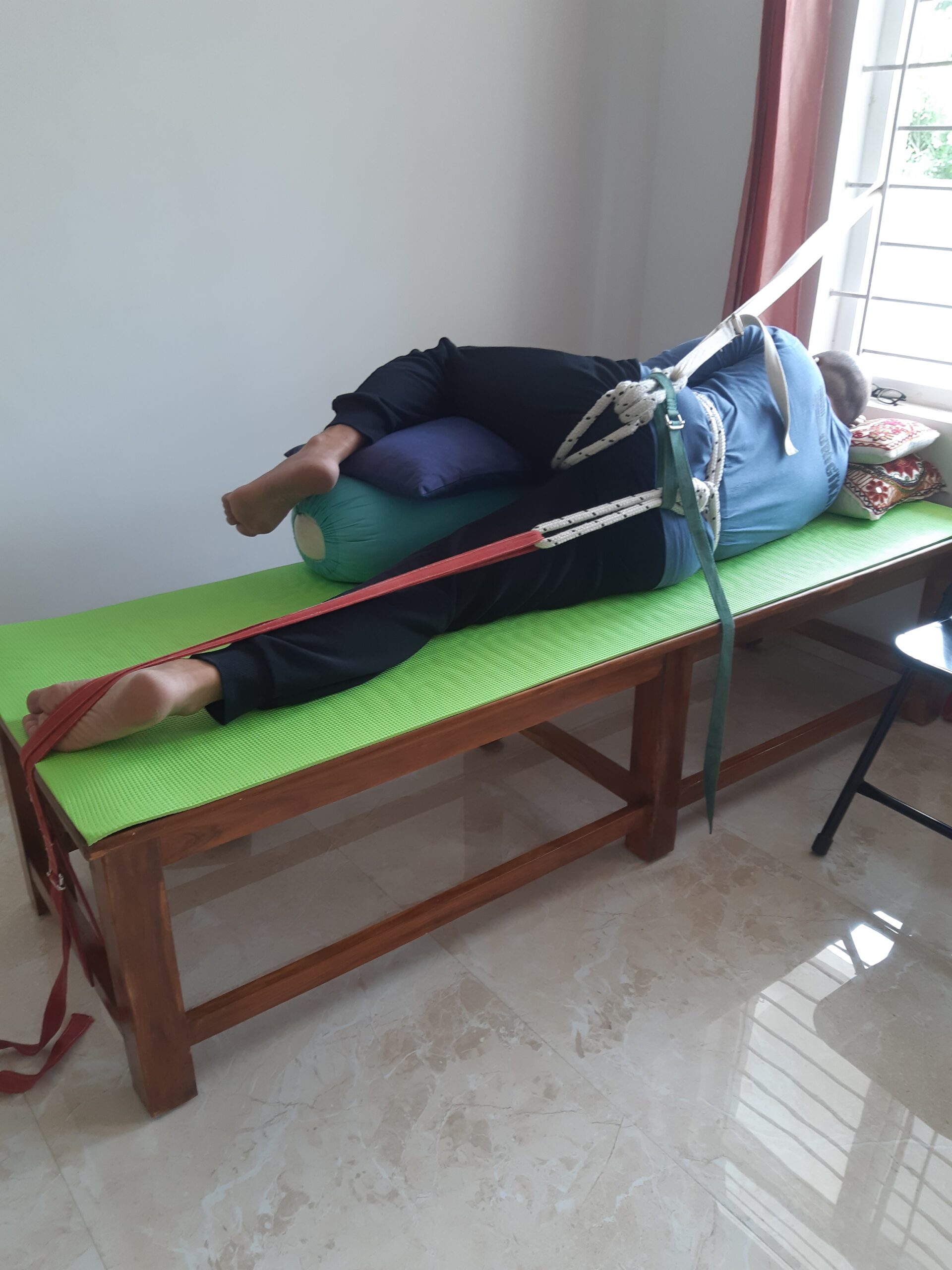
Structure of the session: A Medical Yoga Therapy session has a particular yoga sequence designed to help mitigate lower back pain. These asanas are performed with the help of yoga props such as ropes and belts. Considerable thought is given to designing yoga sequences for a person with lower back pain, targeting specific muscle’s group and every movement is carefully observed by the therapist. If required, lumbar traction is given as part of rope and belt therapy.
Rope & Belt therapy for Lumbar spondylosis: This therapy has very successful results in alleviating joint pain in the lumbar region which covers the lower back and sacrum. Rope and belt therapy helps release muscle spasms in the paraspinal muscles, restore lumbar lordosis, and decompress spinal discs. It can be beneficial for those suffering from sciatica pain and looking for ways to avoid surgery.
We can address cases of Sciatica pain, prolapsed disc, herniated disc, Bilateral QL pain and other acute problems of the lumbar spine.
Time taken to see the results: People who are at the onset of back pain may see good results within a month; however, results may vary for different individuals. It depends on the severity of the issue and the patient’s commitment to the yogic routine. Commitment means not missing yoga sessions, following the recommended lifestyle changes, doing the daily practice advised by the therapist at home, and following the recommended dietary changes.